
News
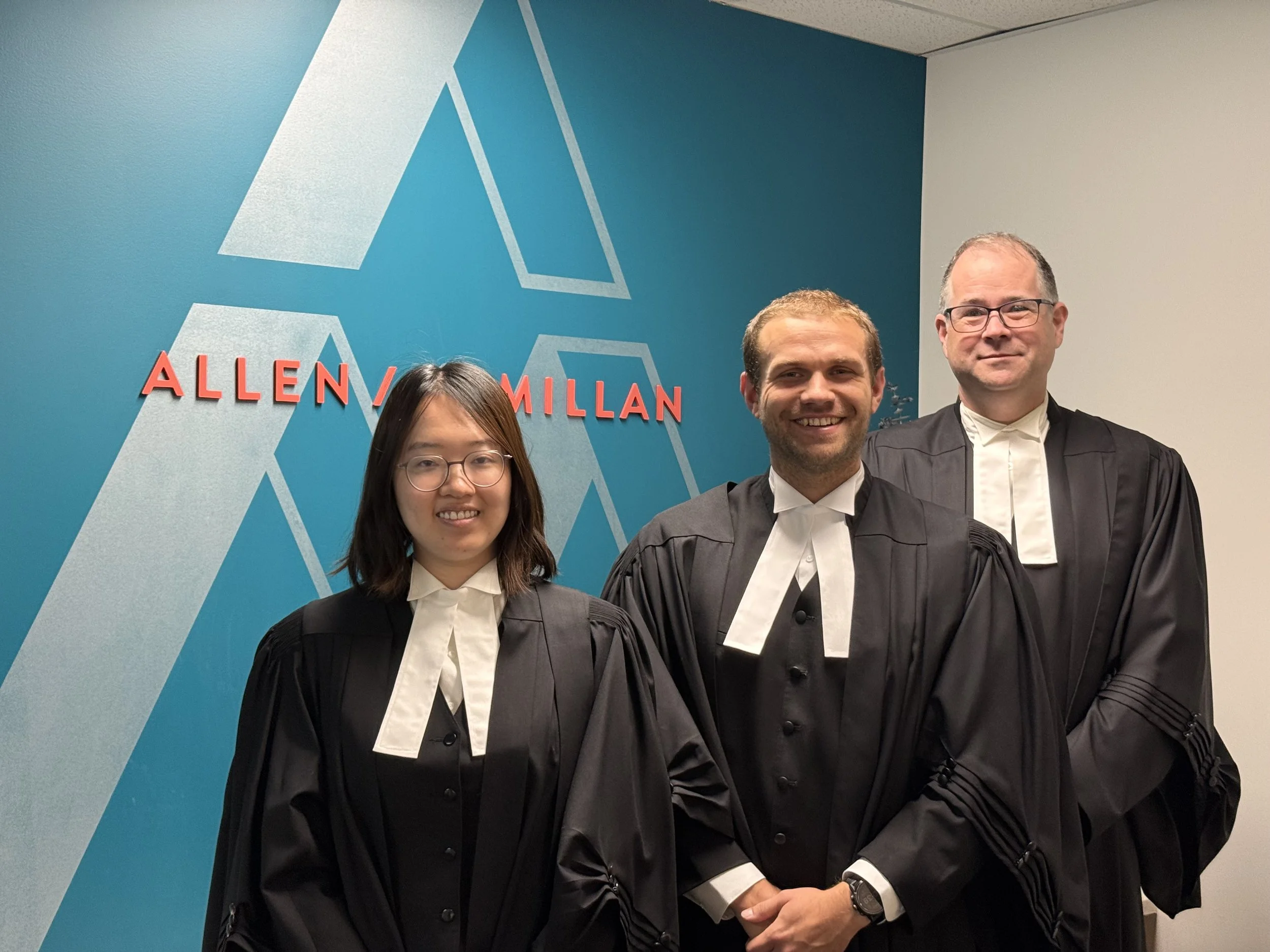
John, Vivian and Noah to represent intervener in religious freedom case at Supreme Court of Canada
AMLC lawyers John Trueman, Vivian Li, and Noah Faust-Robinson will represent the intervener, British Columbia Humanist Association, at the Supreme Court of Canada on October 9, 2026, in an important appeal at the intersection of privacy rights and freedom of religion. This is the fourth appearance by AMLC lawyers at the Supreme Court of Canada in the past three years…
AMLC lawyers John Trueman, Vivian Li, and Noah Faust-Robinson will represent the intervener, British Columbia Humanist Association, at the Supreme Court of Canada on October 9, 2026, in an important appeal at the intersection of privacy rights and freedom of religion. This is the fourth appearance by AMLC lawyers at the Supreme Court of Canada in the past three years.
The appeal, Vabuolas v. Information and Privacy Commissioner for British Columbia, concerns the constitutionality of the Personal Information Protection Act, the BC law that governs how private sector organizations collect, use, and disclose personal information. The appellants are religious organizations who argue that their records about ex-members are confidential and that it would infringe their freedom of religion under section 2(a) of the Charter to disclose them to the individuals whom the records are about. AMLC has represented the BC Humanists throughout this matter, including as an intervener before the BC Supreme Court and the BC Court of Appeal. Read our previous update on the Court of Appeal intervention.
In his oral submissions to the Court, John will explain that freedom of religion includes the freedom to leave a religion, and that privacy legislation and the Charter share the same foundational values of freedom, consent, autonomy, and dignity. He will argue that religious freedom should not become a vehicle to subvert the privacy rights of individuals, including people who have chosen to leave organized religion.
John is supported by two of AMLC’s strong junior lawyers: Noah, who was called to the British Columbia bar in 2026, and Vivian, who was called in 2025. Their involvement reflects our firm’s practice of engaging junior lawyers in significant appellate work early in their careers.
Allen / McMillan Litigation Counsel’s award-winning pro bono practice often includes public interest interventions for organizations such as the British Columbia Humanist Association, who bring important perspectives to the law but have limited resources. AMLC lawyers have previously represented the BC Humanists at the BC Human Rights Tribunal, the BC Supreme Court, the BC Court of Appeal and, now for the third time at the Supreme Court of Canada.
The Supreme Court of Canada’s hearing on October 9, 2026, will be webcast live.
AMLC retains ranking in Chambers Canada Guide 2027
AMLC is proud to be ranked in the Chambers Canada Guide 2027 under Litigation - General Commercial: Highly Regarded. This is the third year in a row we have received this recognition.
AMLC is proud to be ranked in the Chambers Canada Guide 2027 under Litigation - General Commercial: Highly Regarded. This is the third year in a row we have received this recognition.
Also, congratulations to Greg Allen & Wes McMillan for being ranked for their work in Litigation: General Commercial.
We are excited to be included and extend our congratulations to everyone ranked in the Chambers Canada Guide 2027.
7 AMLC lawyers recognized once again by Best Lawyers®
Congratulations to Wes, Greg, Wanda and Bryan for being recognized in the 21st edition of The Best Lawyers in Canada™ and to Nojan, Jorie, and John for being recognized in the sixth edition of Best Lawyers: Ones to Watch in Canada™.
Congratulations to Wes, Greg, Wanda and Bryan for being recognized in the 21st edition of The Best Lawyers in Canada™ and to Nojan, Jorie, and John for being recognized in the sixth edition of Best Lawyers: Ones to Watch in Canada™.
This is the second year where half of the AMLC team has received this recognition. We are proud to be building a firm with solid bench strength from all of its players.
You can learn more about Best Lawyers®, a peer reviewed publication and a source of legal referrals, on their website: www.bestlawyers.com.
Kaitlyn Meyer recognized in Benchmark Litigation: 40 & Under
Congratulations to Kaitlyn Meyer for being recognized in the Benchmark Litigation Canada’s 40 and Under…
Congratulations to Kaitlyn Meyer for being recognized in Benchmark Litigation Canada’s 40 and Under.
This list includes the most notable up and coming litigation attorneys in Canada.
Congratulations to Kaitlyn and all the other lawyers who were selected for this recognition.
Wes McMillan, Alex Mok, and Noah Faust-Robinson secure victory after 10-day trial
Wes McMillan, Alex Mok, and Noah Faust-Robinson successfully secured a liability judgment for the plaintiff against the defendant for its failure to restore the plaintiff’s property and pay rent for the non-operational period…
Wes McMillan, Alex Mok, and Noah Faust-Robinson successfully secured a liability judgment for the plaintiff against the defendant for its failure to restore the plaintiff’s property and pay rent for the non-operational period.
The plaintiff operated a hotel in Duncan, B.C. During the pandemic, it leased the hotel to the defendant so that the defendant could provide temporary shelter for the vulnerable population in the region. The arrangement eventually lasted for almost two years. As a result, the rooms were extensively used, and the property could no longer operate as a hotel.
The trial was split into two phases. In the first phase, the trial judge found in favour of the plaintiff and concluded that the defendant failed to restore the property to the required standard and failed to pay rent until the property was functioning again. The parties will appear before the trial judge again to argue the quantum of the claim in the second phase of the proceedings.
The matter spanned a period during which Wes McMillan and Greg Allen each went on sabbatical and assumed conduct of the file at different points to ensure its continued progress. This reflects AMLC’s collaborative and collegial approach to preserving continuity and providing seamless representation on an extended and complex matter.
For the full details on this case, visit: 2026 BCSC 1371. For more information on Allen / McMillan’s commercial litigation practice, please contact Wes (wes@amlc.ca) or Alex (alex@amlc.ca).
Welcome Back, Molly Robson!
AMLC is pleased to welcome Molly Robson back to the team as an articling student…
AMLC is pleased to welcome Molly Robson back to the team as an articling student.
Molly completed her summer articles at AMLC before graduating from the University of Victoria this spring. We are excited to have her rejoin the team.
Welcome back to the team, Molly!